
The DIY Wire Blog
What Would You Do If Your Water Supply Disappeared Tomorrow?
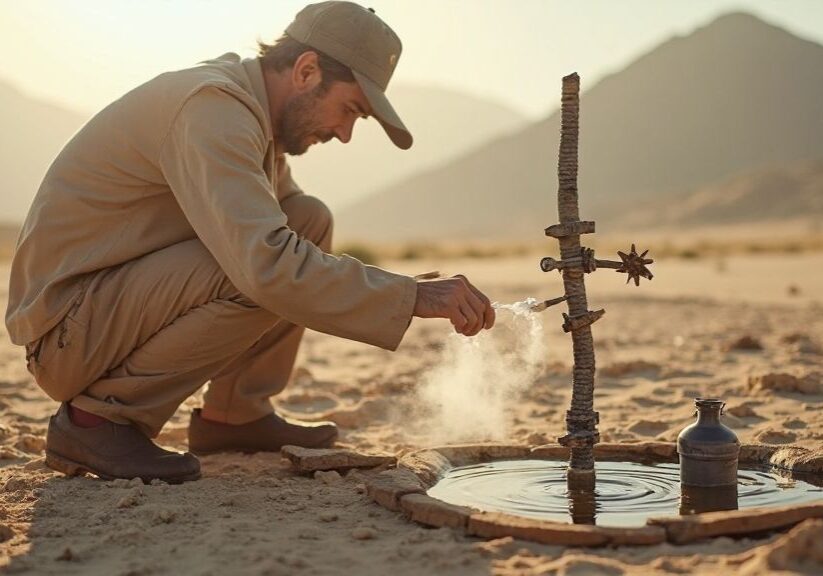
Most people don't think about water until it stops coming out of the tap.
That's understandable. In normal times, water is the most reliable thing in your life. You turn the handle, it flows. You flush, it refills. You've never had to think about it, so you don't.
But normal times have a way of ending without warning. A pipe bursts. A well runs dry. A regional drought tightens municipal supply. A storm knocks out the pumping station for three days. Suddenly the most basic requirement for human survival — something you've taken for granted your entire life — is no longer available on demand.
What happens then?
The Uncomfortable Reality About Water Vulnerability
The average person can survive roughly three days without water. That's not a statistic worth testing.
Yet most American households have virtually no water storage and no backup plan. If the tap stopped working right now, most families would be in serious trouble within 24 hours — not from dramatic disaster, but from the quiet failure of infrastructure they assumed was invincible.
Consider what depends on a functioning water supply:
- Drinking and hydration
- Cooking and food preparation
- Sanitation and hygiene
- Toilet function
- Medication management for anyone on specific health protocols
- Pets and livestock
A single day without water doesn't just mean thirst. It means a household that starts to break down in multiple ways simultaneously.
Drought Is Not a Distant Problem
There's a tendency to think of water scarcity as something that happens elsewhere — in developing countries, in remote desert regions, in places that were always dry. That thinking is increasingly outdated.
Large portions of the American West have been experiencing prolonged drought conditions for years. Lake Mead, which supplies water to roughly 25 million people across Nevada, Arizona, and California, has dropped to historically low levels multiple times in the past decade. Aquifers across the Great Plains — the underground water reserves that took thousands of years to fill — are being drawn down faster than they can recharge.
Even in regions not traditionally associated with water stress, extreme weather events are creating temporary but severe water emergencies. Winter storms knock out water treatment facilities. Floods contaminate municipal supplies. Pipes freeze and burst during cold snaps that didn't used to reach certain latitudes.
The point isn't to alarm. The point is that water vulnerability is not a fringe concern — it's a mainstream risk that most households are completely unprepared for.
The Well Owner's False Sense of Security
If you're on a municipal water supply, your vulnerability during a power outage is real but somewhat limited — most municipal systems have backup power for their pumping infrastructure, at least for a while.
If you're on a private well, your vulnerability is more immediate and more personal. Your well pump is electric. No power means no water, full stop — regardless of how much water is actually in the ground beneath your property.
Many rural homeowners discover this for the first time during their first extended power outage. They have a well. They assumed that meant independence. Instead, they have no running water until the grid comes back.
A backup power source for the well pump, a manual hand pump installed alongside the electric one, or a stored water supply addresses this gap — but only if you've thought about it before the outage hits.
Practical Water Preparedness: Where to Start
The goal of water preparedness isn't to build a bunker. It's to give your family a reasonable cushion — enough time and resource to deal with an interruption without it becoming a crisis.
Step 1: Store What You Need
FEMA recommends one gallon of water per person per day as a minimum, with a two-week supply as a reasonable preparedness target. For a family of four, that's 56 gallons. Large food-grade water storage containers (55-gallon barrels) cost around $30–$50 and can be filled from your tap. Store them somewhere cool and dark, and rotate the water annually.
This is the absolute baseline. It costs almost nothing and takes one afternoon to set up.
Step 2: Know How to Purify Water
Stored water covers short-term emergencies. For longer disruptions, you need the ability to make water from alternative sources safe to drink. A quality water filtration system — gravity-fed filters are popular for home use — can turn creek water, rainwater, or other questionable sources into clean drinking water. Combined with water purification tablets (inexpensive and shelf-stable), you have a reliable purification capability that doesn't depend on power or chemicals.
Step 3: Collect What Falls From the Sky
Rainwater harvesting is legal in most U.S. states (check your local regulations) and remarkably productive. A modest roof catchment system — gutters directing runoff into food-grade storage tanks — can collect hundreds of gallons from a single decent rainstorm. In wetter regions, it can provide a meaningful supplemental supply year-round.
Step 4: Explore Atmospheric Water Generation
One of the more remarkable developments in water technology in recent years is the refinement of atmospheric water generators — devices that extract moisture from the air and condense it into drinkable water. The technology has existed for decades but has become significantly more efficient and affordable. For families in areas facing drought conditions or unreliable infrastructure, atmospheric water generation represents a genuinely independent water source — one that doesn't rely on a well, a municipal system, or stored supplies.
The Question Worth Asking Now
Nobody wants to think about their water supply failing. It feels like catastrophizing — the kind of worry that belongs to survivalists rather than regular families going about their lives.
But preparing for a water disruption is not a dramatic act. It's a practical one. It's the same logic that leads you to keep a spare tire in the car, maintain insurance on your home, or keep a first aid kit in the kitchen.
You don't expect to need it. You have it because if you do need it, having it makes all the difference.
Start with stored water. Add a filtration capability. Know where your backup sources are. Do it before you need it, while it's a calm, considered decision rather than a panicked scramble.




This site contains affiliate links. We may earn a commission if you purchase through our links, at no additional cost to you.
©2026 Say Cheese Productions LLC | All Rights Reserved
support@thediywire.com