
The DIY Wire Blog
The Family Preparedness Checklist Most People Ignore Until It's Too Late

There's a version of preparedness that most people dismiss without thinking about it — the extreme version, the one associated with underground bunkers and years of freeze-dried food and a general distrust of society.
That version gets a lot of attention. And because of it, the reasonable version — the practical, accessible, common-sense version — gets ignored by the very people who would benefit most from it.
This article is about the reasonable version.
It's about the gap between where most families are right now — completely unprepared for any disruption to normal infrastructure — and where they could be with a few weekends of focused effort and a modest investment. That gap is smaller than most people think. And closing it matters — not because catastrophe is inevitable, but because disruptions of various scales happen to regular families all the time.
Why Families Wait Until It's Too Late
The most common reason people don't prepare is simple: nothing bad has happened yet. This is a reasonable way to operate in most areas of life. You don't fix what isn't broken.
The problem with applying this logic to emergency preparedness is that the time to prepare is specifically before the emergency — not during it. When the power goes out, the store shelves are already empty. When the water stops, it's too late to go buy filters. When the storm hits, the generator you meant to buy last year isn't in your garage.
Preparedness is one of the few areas where acting before you need to is the only option that actually works.
The Four Areas That Matter
A family's resilience in an emergency comes down to four basic categories: water, food, power, and communication. Everything else is secondary. Get these four covered to a reasonable level and your family can handle most disruptions — from a three-day power outage to a weeks-long regional emergency — with significantly less stress and risk than an unprepared household.
1. Water
Water is the most critical and most overlooked category. Most families have essentially no water reserves. The standard recommendation is one gallon per person per day for drinking and basic sanitation. A two-week supply for a family of four is 56 gallons — achievable with two or three large food-grade storage barrels that cost $30–$50 each.
Beyond storage, a water filtration capability gives you the ability to make water from imperfect sources safe. A gravity-fed filter, purification tablets, and knowledge of nearby water sources extend your resilience indefinitely beyond your stored supply.
Minimum target: 2 weeks of stored water + a quality filtration system.
2. Food
Food is more forgiving than water — the goal is a practical buffer that keeps your family fed through a disruption without requiring a trip to a store that may be empty or inaccessible. The simplest approach: rotate what you eat. Buy more of the shelf-stable foods your family already consumes — canned goods, dried pasta, rice, beans, oats — and maintain a running surplus of two to four weeks.
A manual can opener. A camp stove with fuel canisters. The ability to cook without electricity. These three things extend your food preparedness significantly with minimal investment.
Minimum target: 2–4 weeks of shelf-stable food + manual cooking capability.
3. Power
Modern households are deeply dependent on electricity in ways that only become apparent when it disappears — heating and cooling, refrigeration, medical devices, communication, lighting, well pumps.
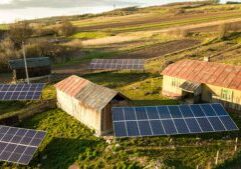
Full backup power for an entire home is a significant investment. But targeted backup power — keeping the most critical things running — is accessible to almost any family. A portable power station paired with a solar panel can keep phones charged, power medical devices, run lights, and operate a small refrigerator through an outage. These systems are silent, require no fuel storage, and are safe to operate indoors.
Minimum target: A portable solar power station for critical devices + a heating/cooling plan for extreme climates.
4. Communication
When the power goes out, internet routers go dark. When a regional emergency hits, cell towers get overloaded. When both happen simultaneously — which they often do during major weather events — most families lose their ability to receive emergency information or communicate with relatives.
A battery-powered or hand-crank NOAA weather radio ($25–$40) gives you access to official emergency broadcasts without any dependency on power or cellular networks. Beyond that: a paper list of important phone numbers, a predetermined family meeting point, and an out-of-state contact that local family members can check in with when local lines are overwhelmed.
Minimum target: A NOAA weather radio + a written family communication plan.
The One-Weekend Setup
If you've never thought about preparedness before, here's a practical starting point that requires one weekend and approximately $300–$500 in total investment:
Friday evening: Make the list. Assess what you have and what you're missing across the four categories. Write down your family's specific needs — medications, infant supplies, pet food, mobility considerations.
Saturday: Buy water storage containers and fill them. Pick up a water filter. Stock up on shelf-stable food. Buy a manual can opener and check your camp stove fuel supply.
Sunday: Research portable power stations and order one if it fits your budget. Set up the NOAA radio. Write down your family communication plan and store it somewhere everyone knows about.
That's it. You're not a prepper. You're a prepared parent — which is a completely different thing.
The Mindset Shift That Makes This Easy
The mental barrier to preparedness is usually not practical — it's psychological. Thinking about emergencies feels like inviting them. It feels pessimistic, anxious, excessive.
But consider the alternative framing: preparedness is an act of confidence, not fear. It's the decision to handle whatever comes from a position of capability rather than scrambling. It's the difference between reacting to a crisis and managing one.
The families that come through disruptions well are almost always the ones who did a small amount of calm, rational planning before anything happened. That planning is available to any family. It doesn't require extreme measures, large budgets, or a particular worldview. It just requires deciding that your family's safety and comfort is worth a weekend of attention.
Start this weekend. One category at a time. The peace of mind that comes from being prepared is worth far more than the effort it takes to get there.






This site contains affiliate links. We may earn a commission if you purchase through our links, at no additional cost to you.
©2026 Say Cheese Productions LLC | All Rights Reserved
support@thediywire.com