
The DIY Wire Blog
10 Signs Your Home Is Way Too Dependent on the Grid
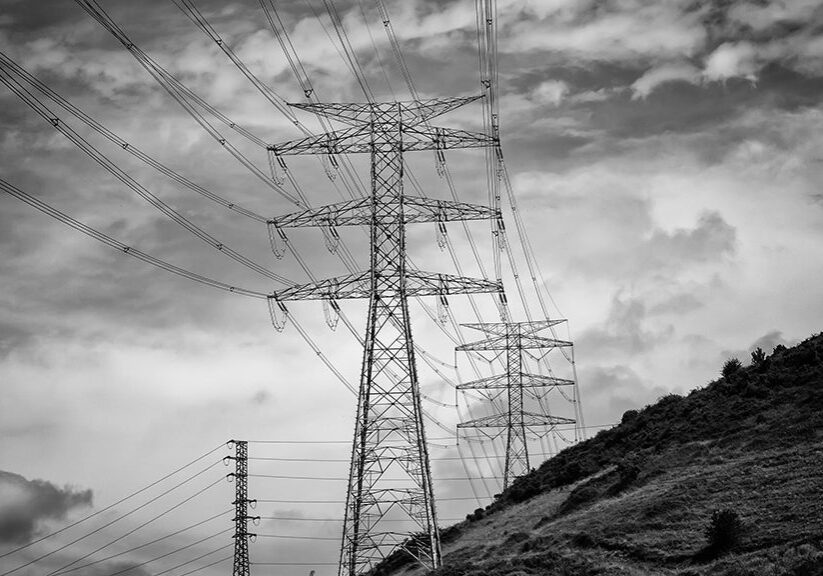
Most people don't think about their relationship with the electric grid until the power goes out. Then, suddenly, they realize how completely the grid is threaded through everything they rely on — and how helpless they are without it.
This isn't about doomsday prepping or living in the woods without electricity. It's about a practical question: how vulnerable is your household to something outside your control?
1. A Power Outage Immediately Threatens Your Food Supply
The average American household has $300–$500 worth of food in the refrigerator and freezer at any given time. A full freezer will stay safely cold for about 48 hours if you don't open it. A half-full one, about 24. If your food security vanishes the moment the grid does, that's a real vulnerability — not a hypothetical one.
2. Your Heating System Is Completely Grid-Dependent
Even homes with natural gas or propane furnaces are often fully dependent on grid power. The blower motor, the igniter, the thermostat — all electric. No grid, no heat, regardless of how much gas is in the line. In a winter power outage, a home with no backup heating capability can drop to dangerous temperatures within hours.
3. You Have No Idea What Your Home's Energy Baseline Is
If you can't name your average monthly kilowatt-hour consumption, you don't have a realistic picture of your energy situation. Pull up the last 12 months of your utility bills. Add up the kilowatt-hours. Divide by 12. That's your monthly baseline — and every off-grid and backup power calculation starts from that number.
4. Your Utility Bill Goes Up Every Year and You Accept It
Electricity rates have increased an average of 2–4% per year over the past two decades. In most cases there's no competitive alternative — you pay what the utility charges. Every dollar you shift to self-generated solar power is a dollar permanently removed from that equation, and it doesn't increase with rate hikes.
5. You've Never Tested What You'd Do Without Power for 72 Hours
Who needs medication that requires refrigeration? Does your water come from a well with an electric pump? How do you cook? How do you heat or cool the house? The gaps in this exercise are your vulnerabilities — and your prioritization list for what to address first.
6. Your Water Supply Depends Entirely on Grid Power
Homes on well water lose water pressure the moment the grid goes down, because the well pump is electric. If you're on a well and don't have a backup power source for the pump, you have no running water during an outage. No cooking water, no toilet flushing, no water for livestock or garden.
7. You're Running High-Draw Appliances Without Any Efficiency Strategy
If your home still has older lighting, a pre-2010 refrigerator, an electric water heater set to 140°F, and no smart power management, you're probably spending $200–$400 per year more than necessary before any off-grid investment is even considered.
8. You Have No Backup Communication Plan
If a power outage also takes out your internet router and cell towers get overloaded, do you have a way to receive emergency information? A battery-powered or hand-crank weather radio ($25–$40) gives you access to NOAA emergency broadcasts without grid or cellular power. Small investment, real value when everything else is down.
9. Your Workshop or Home Office Goes Dark With the House
If you work from home, a power outage is lost income. A small dedicated battery backup — even a portable power station with 500–1000 watt-hours of capacity — can keep a home office running for a full day when paired with a solar panel. Targeted solution to a targeted problem.
10. You've Thought About This Before But Haven't Done Anything
This is the most common sign of excessive grid dependency: awareness without action. Most people know they're vulnerable. They've thought about solar or a generator or battery backup. They just haven't done anything yet — usually some combination of "it seems complicated" and "I'll deal with it later."
The practical entry point is simpler than most people think. A $400 portable solar generator, a $20 battery-powered radio, and $50 of weatherstripping represents a meaningful first step — no complicated installation required.
The Point
Reducing grid dependence isn't about abandoning the grid. It's about not being completely at its mercy. That's a goal worth working toward, one practical step at a time.




This site contains affiliate links. We may earn a commission if you purchase through our links, at no additional cost to you.
©2026 Say Cheese Productions LLC | All Rights Reserved
support@thediywire.com