
The DIY Wire Blog
Off-Grid Power Explained: Solar, Wind, and Battery Backup Compared
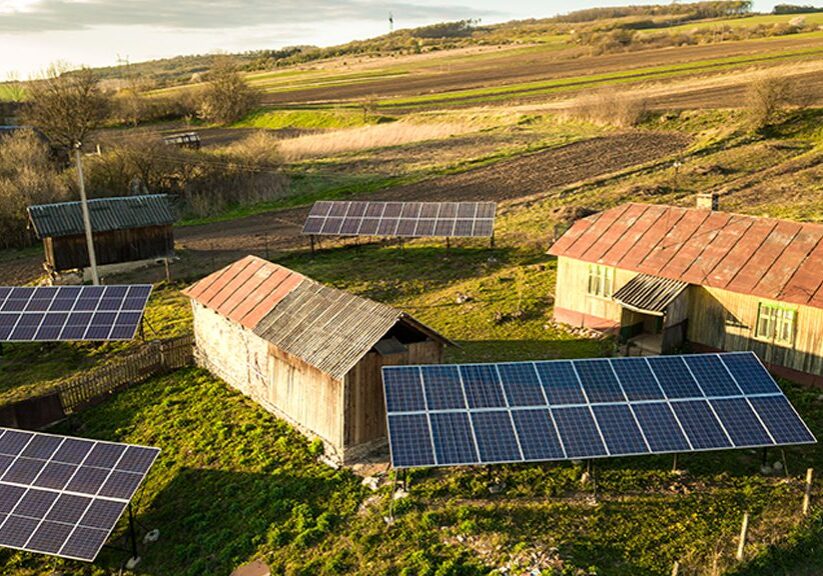
The phrase "off-grid power" gets used loosely. For most homeowners it means something practical: reducing dependence on the utility grid, lowering monthly bills, and having power available when the grid goes down.
If you're trying to figure out which approach makes sense for your situation, this breakdown will help. No hype — just a practical look at what each option does well, what it costs, and where it falls short.
Solar Power
How It Works
Photovoltaic (PV) solar panels convert sunlight directly into DC electricity. An inverter converts that to the AC power your home appliances use. In a grid-tied system, excess power feeds back to the utility. In an off-grid or hybrid system, excess power charges a battery bank for use when the sun isn't shining.
What It's Good For
Solar is the right foundation for almost any residential off-grid or hybrid system. It's silent, requires almost no maintenance, has no moving parts, and produces power reliably for 25+ years from a quality panel. In most of the continental US, solar resource is adequate for meaningful energy production even in northern states.
The Numbers
A full home solar system runs $15,000–$30,000 installed before incentives. The federal Investment Tax Credit allows you to deduct 30% of the system cost from your federal taxes. With incentives, payback periods of 7–12 years are common, with panels continuing to produce power for 15–20 years after that. Smaller partial systems — a few panels powering specific circuits — start around $2,000–$5,000.
Limitations
Solar produces nothing at night and significantly less on heavily overcast days. This intermittency is the central challenge of solar energy and the reason battery storage or a grid/generator backup is almost always paired with it.
Wind Power
How It Works
A wind turbine uses spinning blades to drive a generator. Like solar, the output passes through an inverter. Small residential turbines range from a few hundred watts to 10 kilowatts.
What It's Good For
Wind is genuinely complementary to solar — it tends to blow more in the evening and during overcast conditions when solar production drops. In areas with consistent wind resources (coastal areas, open plains, higher elevations), a small turbine can meaningfully supplement solar.
The Numbers
A small residential wind turbine (1–3 kW) costs $3,000–$8,000 installed. Maintenance costs are higher than solar because turbines have moving parts: bearings, blades, and the generator itself all require periodic inspection.
Limitations
Wind is highly site-dependent. The wind resource in a suburban backyard surrounded by trees and buildings is typically poor. Local zoning is also a real constraint — many municipalities restrict turbine height and placement. Check before you plan around it.
Honest assessment: For most suburban homeowners, wind is a secondary consideration. Solar almost always makes more sense as the primary generation source.
Battery Storage
How It Works
Battery storage systems capture energy generated by solar (or drawn from the grid during low-rate hours) and store it for later use. Modern residential systems use lithium iron phosphate (LFP) chemistry, which offers better cycle life and improved safety over older lead-acid systems.
What It's Good For
Battery storage solves solar's intermittency problem. It turns a solar system from "helps during the day" into "keeps the lights on all night and through outages." It's also the key component in any backup power strategy.
The Numbers
The Tesla Powerwall (13.5 kWh) costs approximately $12,000 installed. Competing products from Franklin Electric, Enphase, and Sonnen offer similar capacity at varying price points. Entry-level portable battery stations (Jackery, EcoFlow, Bluetti) range from $300 to $2,500 and handle smaller loads — ideal for a home office or workshop.
Limitations
Battery capacity is finite. A single Powerwall won't run central air conditioning through a three-day outage. System sizing — matching battery capacity to the loads you need to support — is the key planning exercise for any battery installation.
Generator as Backup
Generators don't generate off-grid energy in the renewable sense, but they're a practical component of a complete backup system. A standby propane or natural gas generator ($3,000–$10,000 installed) automatically starts when grid power fails and can run indefinitely as long as fuel is available. Paired with solar and battery storage, a generator covers the gaps — extended cloudy periods, winter months with reduced solar production, or outages that outlast the battery.
Putting It Together
The practical strategy for most homeowners follows a logical sequence:
- Reduce consumption first (insulation, efficient appliances) — free or low cost, high return
- Add solar as the primary generation source
- Add battery storage to extend solar's usability and provide outage backup
- Add wind or generator only if your site and needs justify it
You don't have to do all of this at once. Each step stands on its own. The grid will keep getting more expensive and less reliable. Building your own energy foundation, even incrementally, is one of the most practical long-term investments a homeowner can make.




This site contains affiliate links. We may earn a commission if you purchase through our links, at no additional cost to you.
©2026 Say Cheese Productions LLC | All Rights Reserved
support@thediywire.com