
The DIY Wire Blog
5 Woodworking Projects Any Beginner Can Build This Weekend
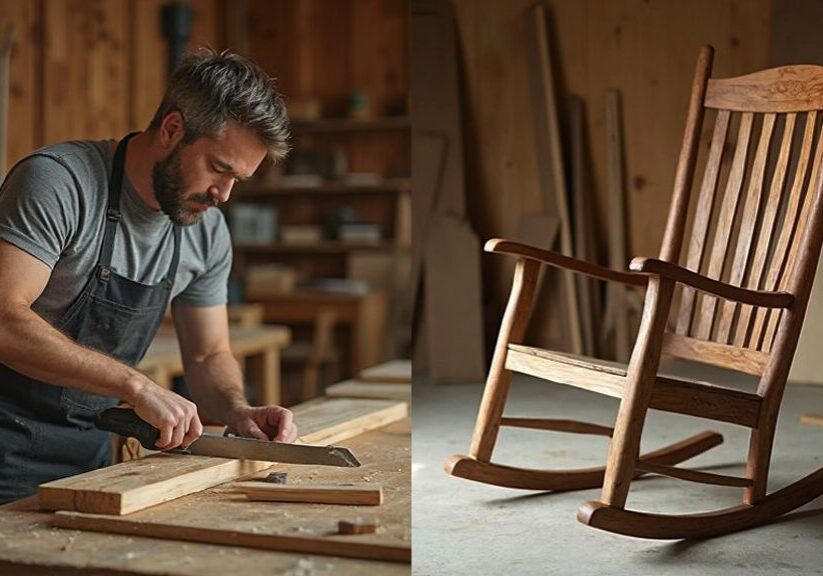
There's a moment that happens to almost every new woodworker. You're standing in the lumber aisle at the hardware store, staring at a wall of boards, and you realize you have absolutely no idea what you're doing.
That's fine. Everyone starts there.
The good news is that woodworking doesn't require years of training before you can build something real and useful. With basic tools, a few hours, and the right project, a complete beginner can walk away with something they actually made — and that actually works.
Here are five projects that fit that description. No exotic joinery. No $3,000 tool list. Just straightforward builds that teach real skills while producing something worth keeping.
1. A Solid Wooden Step Stool
This is the single best first project in woodworking, and it has been for generations. A step stool is small enough to finish in a day, uses minimal materials, and teaches you the core skills you'll rely on forever: measuring accurately, making straight cuts, drilling clean holes, and assembling pieces that actually line up.
What you'll need: A single 1x10 pine board (about 6 feet), wood screws, sandpaper, and wood glue.
What you'll learn: How to use a circular saw or miter saw safely, how to pre-drill to avoid splitting wood, and how to sand a finished piece properly.
The result is genuinely useful around the house — and when someone asks where you got it, you'll enjoy saying you built it yourself.
2. A Wall-Mounted Shelf With Bracket
Simple floating shelves look like they require advanced skills. They don't. A basic wall-mounted shelf — a plank of wood, two wooden brackets, and a few screws into studs — is a beginner project that produces a result that looks completely intentional and professional.
What you'll need: A pine or oak board (your choice of length), two corbel-style brackets from a hardware store or cut from scrap wood, a stud finder, screws, and a level.
What you'll learn: How to find and hit wall studs, how to use a level so things don't look drunk on the wall, and how to apply a simple finish (stain or paint) that protects wood and improves appearance.
Build three or four of these and you've just furnished a room.
3. A Planter Box for the Backyard
A planter box is a project that forgives small mistakes. If your cuts are slightly off or your corners aren't perfectly square, the plants will cover it. That makes it ideal for beginners who are still developing accuracy.
What you'll need: Cedar or pressure-treated pine (cedar is better — it resists rot naturally), exterior screws, and a drill.
What you'll learn: How to work with outdoor lumber, how to account for drainage (drill a few holes in the bottom), and how to apply exterior sealant or stain that holds up to weather.
Cedar planter boxes from garden stores sell for $80 to $150. Yours will cost about $25 in materials.
4. A Wooden Toolbox
Yes, you're building a toolbox to put your woodworking tools in. There's something satisfying about that.
A traditional wooden toolbox — a rectangular box with a center divider and a dowel handle — is a project that's been handed down through generations of woodworkers for good reason. It's simple, it teaches box construction, and it has immediate practical value.
What you'll need: 1x6 pine boards, a wooden dowel for the handle, wood glue, finishing nails or screws.
What you'll learn: How to build a basic box, how to use a dowel in a project, and how to make a structure rigid without it racking or wobbling.
This project also scales well. Once you understand how a box goes together, you can build drawers, crates, cabinet frames, and dozens of other things using the same principles.
5. A Raised Garden Bed
This is the biggest project on the list, but don't let that intimidate you. A raised garden bed is essentially a large rectangular box that sits on the ground. There are no joints more complicated than a corner. No angles other than 90 degrees. And the payoff — a functioning garden bed that you built — is hard to beat.
What you'll need: 2x8 or 2x10 cedar boards, 4x4 corner posts, exterior screws (3 inches), and a drill.
What you'll learn: How to work at a larger scale, how to handle longer boards, how to square a large frame using the 3-4-5 triangle method, and how to work with thicker lumber.
A 4x8 raised bed costs $150 to $300 at a garden center. Built yourself with cedar from the lumber yard, you're looking at $50 to $80 in materials.
A Note on Tools
You don't need much to build any of these projects. At minimum: a circular saw or miter saw, a cordless drill/driver, a tape measure, a speed square, 80 and 120 grit sandpaper, and a pencil.
If you already own a drill and can borrow or rent a saw, you're equipped for every project on this list.
The Actual Point
None of these projects will make you a master woodworker. That's not the goal. The goal is to get comfortable with the tools, develop the habit of measuring twice, and build the confidence that comes from finishing something with your hands.
Start this weekend. Pick one project. Buy the wood. Build the thing. The rest follows from there.

©2026 Say Cheese Productions LLC | All Rights Reserved
support@thediywire.com